 |
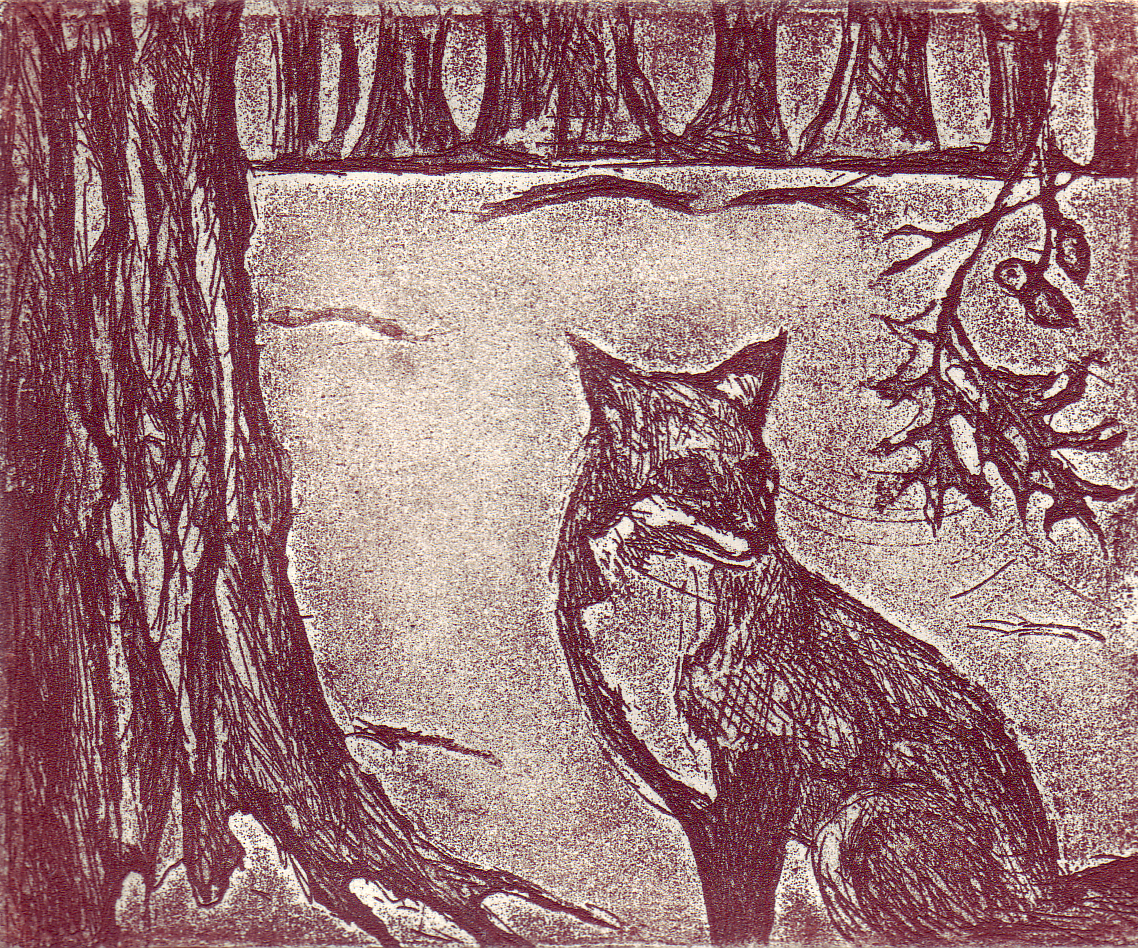
| Rendezvous Point |
Not as many prints to show you this week, as the intaglio aquatint process is a more time consuming method than waterless lithography.
An aluminium plate is first stopped out with a product called Golden (although One-Go floor polish can also be used, with varying results of “foul biting”), and the image created with an etching needle. The plate is then placed in the etchant (copper sulphate, sodium chloride and sodium bisulphate mix is used as a far-safer-than-traditional etchant) for 15-20 minutes, removed, cleaned with ammonia, rinsed and dried. For the tonal variations, Golden/One-Go is used to stop out the areas that are to be left white, dried, then placed in etchant for one – one and a half minutes. The next lightest areas are then stopped out, dried, place in etchant, and so on. By the the time the last tone is stopped and the plate removed from the etchant for the final time, the areas to be black will be deeply etched, while the whites will be, theoretically, untouched by the etchant.
The plate is then cleaned with ammonia once more, rinsed, dried, and is ready to be inked up, polished and printed.
I found the stopping-out process was like thinking in negative, and by the last stop-out I was wondering where on earth I was up to. And for much of it, it was a bit of pot-luck what I’d end up with – but I’m pleased with the results. However, I seem to have forgotten to etch any detail onto one of the wings of the owl…whoops. I’ll fix that today.
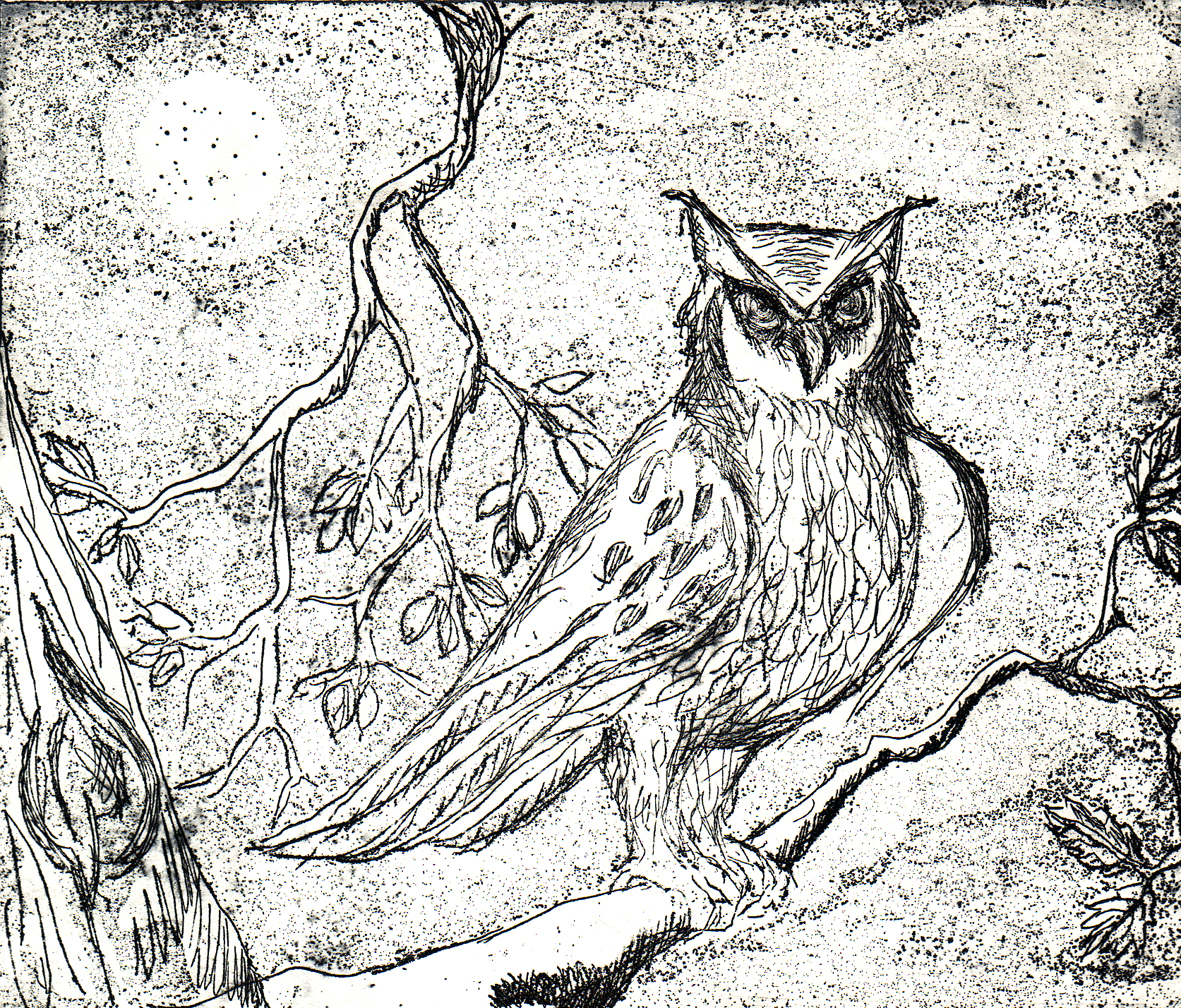 |
| Ann Maree’s Owl |
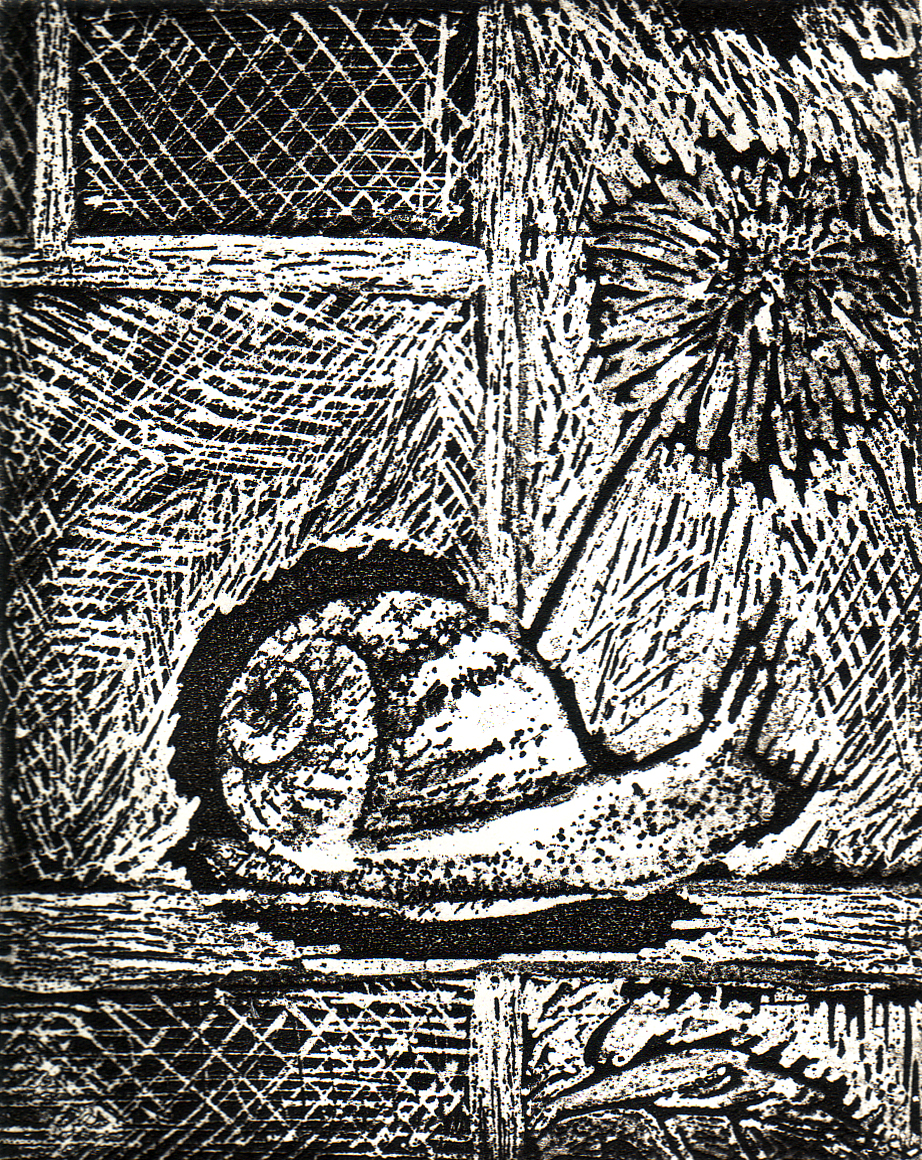 |
| The Ubiquitous Mr Fibonacci II |
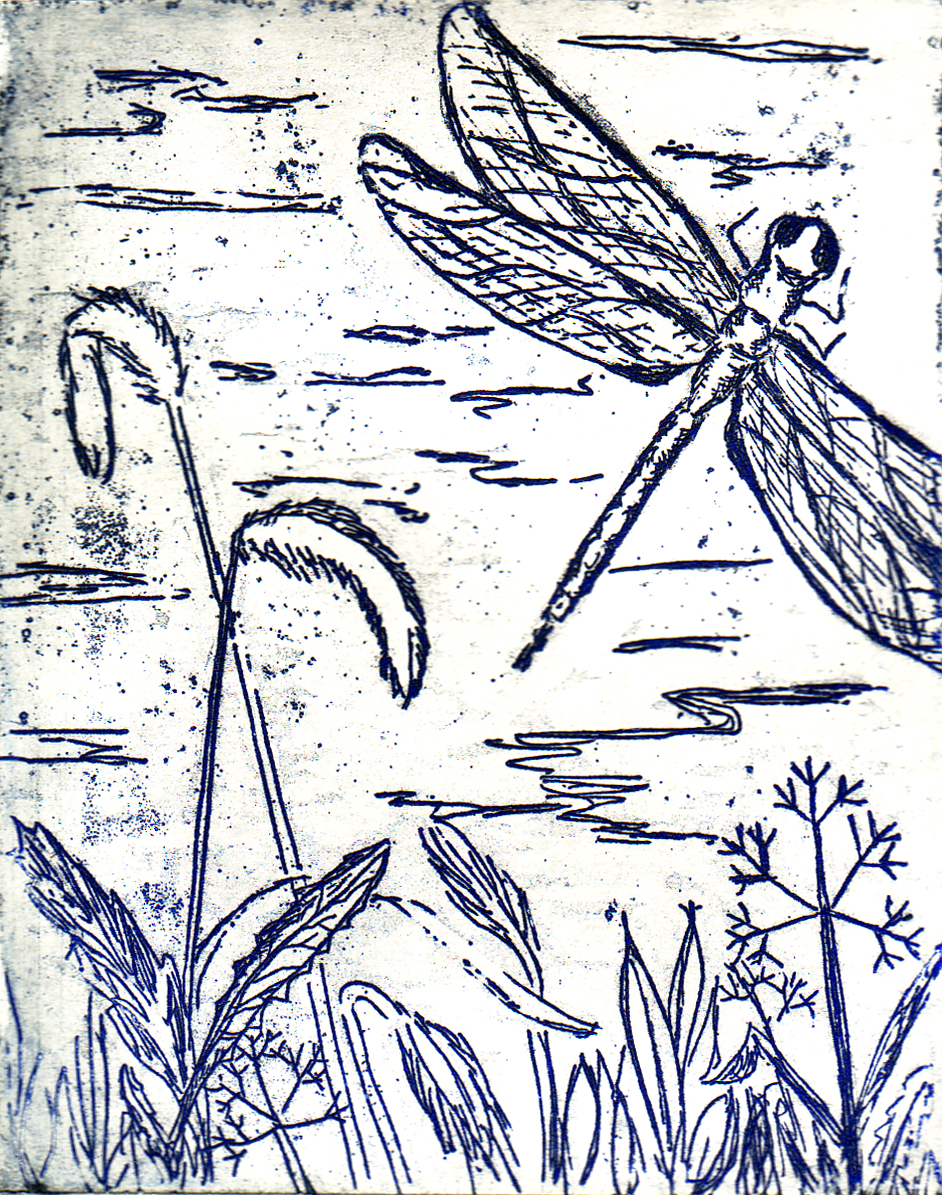 |
| Libellule |
Next week: photopolymer etching.
 Fury Lane Studio
Leave a comment